But is it here to stay? Why climate change and football don’t get along.
It almost goes without saying that football is incredibly popular. In fact, Football is the most popular team sport in the world, with estimates suggesting that there are around 265 million registered players worldwide, with a fan base of around half the world’s population. Aside from fitness and entertainment, football also provides value to our economy; the Premier League (PL) contributes around £8bn annually (the equivalent for the Women’s Super League is not published).
Therefore, it’s pretty simple to assume that we – as a collective – want ‘football’ to continue existing. We want to see our pitches full of muddy matches and for our teams to win competitions. However, climate change is a threat to football. In the UK, we are seeing extreme weather – floods, storms, and heatwaves – which will only get worse and will impact a wide range of activities, especially those outdoor, such as football.
This blog will look at how football will be impacted by climate change and how clubs are – or more importantly aren’t – adapting to ensure that we continue to get the entertainment (and exercise) that’s so important to our culture.
What links climate change and football?
I’ll break down the impacts of climate change into three areas of focus: impacts on players, quality of play, and impacts on facilities.
1. Impacts on players
Climate change brings about increased and new health risks for players and nothing is more frustrating than having your star player out of the game. Climate change increases the risk of heat stress, local pollution, and more frequent and severe flooding. These have a direct impact on health and safety risk:
- Heat stress occurs when the body overheats and can have an impact on athletes’ respiratory, cardiovascular, and metabolic systems. There have even been cases of death, particularly for amateur clubs that don’t have the medical expertise to spot the signs.
- Pollution has a serious impact on player health and performance. In the 2020 Australian Tennis Open, players struggled to breathe due to pollution from local forest fires.
- Playing on a wet pitch can be fine. However, there is an increased risk of injury, particularly for twisted knees, overturned ankles, and pulled muscles (particularly the groin). Running on waterlogged grounds naturally means a higher risk of slips and falls (some of which may not even be dives for a cheeky free kick).
These events – heat waves, flooding, and pollution – will happen more frequently and severely in the future. If there is a significant threat to players’ health and safety, then it will inevitably lead to postponed or cancelled matches.
2. Quality of play
The above health effect will certainly have an impact on the quality of play – it’s common sense that it’s much harder to put a goal into the net when you can’t breathe properly due to pollution.
However, there’s more that climate change can bring to threaten your team’s performance. For example, with heat stress. In hot weather, players don’t run as far, with an average reduction of 7% in total distance run and 26% in high-intensity running. Similarly, there is a similar trend when precipitation levels rise – more rain or snow leads to worse player performance.
3. Impact on facilities
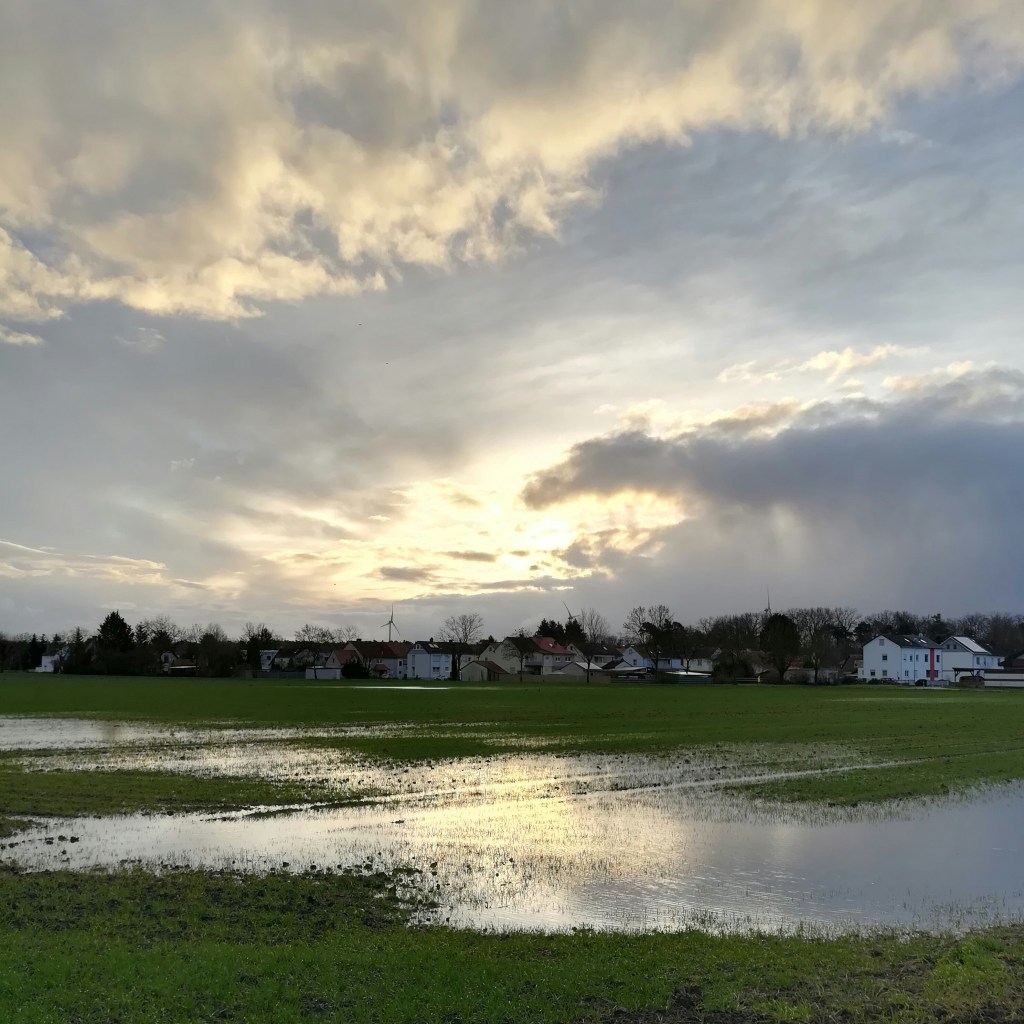
Finally, football teams, whether grassroots or top-league, need access to facilities. Quite simply, players cannot play or train on a flooded or inaccessible pitch – therefore, climate change will bring about an increase in match cancellations or postponements.
Additionally, did you know that maintaining a club’s pitches and facilities requires a vast amount of water and energy; on average, 23 tonnes of water daily for a PL pitch. Football clubs rely on our environments for water and energy resources. You guessed it, climate change threatens this access too. Solutions are needed to ensure that players can access the required facilities.
What are teams doing about it? Or more importantly, what should they be doing about it?
So now we know that there is a threat, we want to know how to protect ourselves. Clubs and organisations must take action to be more resilient, including putting contingency plans in place.
For example, you could consider scheduling your match around the weather conditions – delaying a match in bad weather or scheduling it at cooler times in the day to avoid extreme temperatures. However, this can be challenging – for grassroots sports, you’re already scheduling around busy timetables. Additionally, for major leagues, coordinating matches is challenging and planned far in advance.
The most apparent resilience planning is that clubs must ensure that their stadia and facilities are all resilient to extreme weather events, including flood defences, robust drainage, and air cooling technologies. Wealthy clubs, typically those in the top leagues, are already putting in protective measures. For example, one club has installed under-surface heating on their pitch to prevent freezing and frost damage. Many clubs already train abroad or in high heat temperatures, and this can help train the body to exercise in warmer temperatures, as a measure against heat stress. Providing clubs with the skills to understand and react to climate events – especially health and safety for medical teams – is also a core component of climate planning.
In general, clubs and sporting organisations are aware of the impact of climate change. However, they are uncertain about the required actions and have limited resources to manage climate risk.
So what? What are the impacts and knock-on effects?
So what if the pitches are flooded one week or a player gets injured? It happens! However, there are knock-on impacts of all these risks.
Firstly, there’s the impact on the players. We’ve discussed health and safety impacts, which increases the risk of a player being out of the game – if they’re your main goal scorer or first keeper, I don’t need to spell out the devastating impact. However, an equally worrying issue is the potential impact of not getting any good players in the first place. If the majority of grassroots pitches are going to be flooded, where are our next generation of England stars going to hone their skills before being scouted?
Secondly, there is a potential loss of income from ticket sales. Extreme weather conditions will impact matches and events, a major income resource for clubs. It isn’t just about getting players onto the pitch, but also about safely getting spectators into and out of the stadiums. Without players or spectators, clubs will lose that important income. Major clubs will survive, but those already struggling to stay afloat are reliant on this income.
Finally, all of this comes together for a sportsperson’s worst nightmare – losing your competitive edge. A club that is prepared would be able to train, play matches, and not lose the regular income. If you’re not prepared, as you haven’t thought about adapting and becoming resilient, and your competitors have, they’ll have a major advantage.
Case study
Let’s say we support Chelsea FC (I do). The PL and WSL leagues start around September/October. We start moving from strength to strength, unbeaten for 5 games straight. However, a storm hits the local area – our two stadiums are not impacted, but our training ground is flooded and we have no access to our facilities due to debris and lack of road access.
This means that training is heavily disrupted and, when we get to our next match, the fitness has clearly dropped, and Chelsea comes back with 0 points. (Add picture of the training ground). A competitor, let’s say Arsenal, may have been more forward-thinking and built a resilient training ground – with fewer disruptions over the winter months, they have a competitive advantage.
With the access to resources that a team like Chelsea has, this is unlikely to have a major impact. However, your local grassroots game may not be so lucky. A flood event may put a pitch out of use for a substantial amount of time, and games are not as easily rescheduled.
So, what does this all really mean?
I understand that when talking about climate change, we’re often not focused on entertainment or hobbies – but (rightly so) on life and death matters. However, fundamentally, we want to continue to thrive as well as live. The threats that climate change brings pose a threat to the important things in our lives, whether it’s football or another event.
It is important to understand what the potential impacts are and it’s absolutely vital to manage them – not just to protect the safety of players or rescue the economic value that football brings, but to maintain for the wellbeing of fans of the sport. Whether that’s the dedicated fan who early awaits the weekly match (or biweekly if your team is lucky enough to be in the European competitions) or the football stars of the local pitch, getting fresh air, exercising, and building that vital community network.
It’s inevitable that football and sporting events are going to be impacted by climate change. Even if we were to get to net zero overnight (by some miracle), the impacts of climate change will be felt for decades to come. Therefore, we need to prepare, adapt, and become resilient.
For major clubs, it’s fundamentally the responsibility of the management to manage any material risks, as it is for all directors of a company. However, for grassroots clubs, that responsibility falls to all of us. As football fans, climate risk advocates, and players of the sport, bring this to the attention of your relevant clubs and start engaging in the conversations.
Discussion
- Have you ever had a football or sports match delayed by poor conditions?
- What sports team do you support? What do you expect to see from your team to adapt to more extreme weather?
- Do you expect your team to be getting ahead of the curve by future-proofing themselves and ensuring they don’t fall behind their competitors?
Let me know in the discussion!
Sources and further reading
Access Irrigation. (n.d.). Watering a Football Pitch. https://www.accessirrigation.co.uk/guides-advice/watering-a-football-pitch/
Confidential interview undertaken for MSc thesis research (unpublished).
Darnell, S. C., & Millington, R. (2023). From Sport for to Sport as Sustainability: Confronting the climate crisis in sport for development. Journal of Sport for Development, 11(2), 37 – 46.
EY. (2024). The economic and social impact of the Premier League is highlighted by a report. https://www.premierleague.com/news/3884417
Mabon, L. (2023). Football and climate change: what do we know, and what is needed for an evidence-informed response? Climate Policy, 23(3), 314 – 328. https://doi.org/10.1080/14693062.2022.2147895
Orr, M., Murfree, J., & Stargel, L. (2022). (Re)scheduling as a climate mitigation and adaptation strategy. Managing Sport and Leisure. https://doi.org/10.1080/23750472.2022.2159501
Schneider, S., & Mücke, H.-G. (2024). Sport and climate change — how will climate change affect sport? Ger J Exerc Sport Res, 54(12), 12 – 20. https://doi.org/10.1007/s12662- 021-00786-8
Sports maintenance services. Flood damage. https://www.sportsmaintenance.com/flood-damage/#:~:text=Parts%20of%20the%20pitch%20may,affected%20areas%20creates%20serious%20problems.
Venturini, A. (2022). Climate change, risk factors and stock returns: A review of the literature. International Review of Financial Analysis, 79(101934). https://doi.org/10.1016/j.irfa.2021.101934
Yuan, S., Chang, D., Huang, X., & Zhang, N. (2024). Weather shocks and athlete performance: Evidence from the Chinese Soccer Super League. Journal of Cleaner Production, 451. https://doi.org/10.1016/j.jclepro.2024.14208
 The Climate Communicator
Leave a comment