When you work ‘with’ climate change every day, it’s easy to forget some of the fundamental questions.
When I was asked the other day “when do you think climate change will hit the UK?” I was quite surprised. There are a few layers to the question, but my response focused on
explaining attribution science.
This blog explores what attribution science is and why it is so important.
The inquisitive person was right about many things:
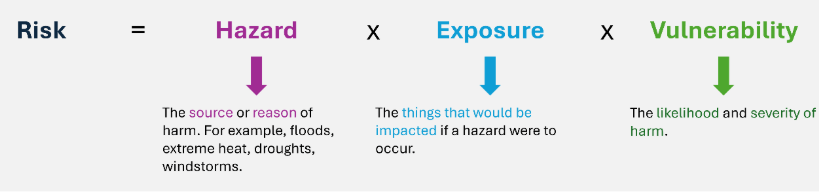
- The UK has historically experienced flooding, windstorms, and other natural extreme weather patterns. Climate change has not brought about anything ‘new’; the underlying
hazard remains the same. - As a risk expert, they understood that the cost of damage is getting increasingly severe because we are building more and more expensive assets (e.g. houses, train stations) across the country.
- They understood that climate change would make extreme weather events more frequent and severe. However, because they had never seen clear evidence that climate
change made an event worse by a set amount, as a numbers-focused person, they were unclear on the extent of the impact that climate change has had on the UK.
In short, they hadn’t seen the ‘evidence’ of how much climate change has had an impact.
As a reminder:
Other than proving that climate change has absolutely ‘arrived’ in the UK, why does attribution science actually matter?
Four areas stand out:
Knowledge building
Most obviously, one purpose behind attribution studies is that we learn a lot from them. The methodologies behind attribution science are relatively new, with meaningful progress being made in the last 20 years. It is constantly evolving and helping us to refine how we understand the link between climate change and real-world events. The more we understand climate change, the more we can help build our resilience.
Knowledge sharing
Climate change often feels like an abstract concept, which was the underlying issue that sparked the “when will climate change hit the UK” question. Attribution science means that we can begin to shift our language away from abstract statements (e.g. “Hurricane Melissa intensified by climate change”) to something more tangible (“Climate change increased the economic damage by 34%”).
This helps the public connect climate change to real-world impacts and helps to drive more engagement on the topic. It also helps policymakers and businesses make informed decisions.
Inform climate risk management
For those like me who work in risk or the financial sector, attribution science can help feed into how we understand and prepare for the future. Risk models, which underpin a lot of economic and financial decisions, can use attribution science to better understand the risk. This then links into decisions such as pricing and investment.
In short, if we can better quantify how risk is changing, we can make better decisions about how to manage it.
We can also use attribution science to better understand how much climate change is costing a company or country, again, helping to inform decisions. It’s much easier to make divestment choices (e.g. stepping away from oil and gas) when you can directly assess how much it is costing you (e.g. insurance claims).
Litigation cases
This is my particular favourite outcome of increasingly reliable attribution studies; we can more clearly identify who is at fault and allocate some responsibility. There are a few different types of attribution studies. One of which these is source attribution, helping us to understand the extent to which an industry or country has contributed to climate change.
As the evidence strengthens, it can open the door to legal action – understanding who is responsible for the damage and whether costs can be attributed to specific countries or companies.
Currently, typically the people ‘picking up the bill’ are governments and insurers and the financial sector. However, this isn’t feasible in the long-term as costs get too high to manage.
Put those together, and it’s not hard to imagine a rise in climate-related litigation as attribution science becomes more robust.
What’s next?
What if attribution science didn’t stop at weather? I’d like to see attribution studies investigate to what extent climate change contributes to:
- food insecurity?
- migration?
- geopolitical conflict?
We’re not quite there yet, but it could revolutionise the conversation.
Conclusion
Led globally by the Intergovernmental Panel on Climate Change, attribution science is constantly refining how we understand the link between climate change and real-world events. However, we aren’t quite there yet, and the methodology is still developing.
Ultimately, once we can quantify the impact of climate change, it becomes much harder to ignore and much harder not to act. Importantly, it could allow us to begin framing the conversation around accountability: who is responsible, and who should bear the cost.
Join the discussion:
- Do you think attribution science is convincing enough to change behaviour, or does it still feel too abstract?
- Should attribution science be used to assign financial or legal responsibility for climate damage?
- What areas beyond weather do you think attribution science should explore next?
Further reading:
Met office introduction
https://www.metoffice.gov.uk/research/climate/understanding-climate/attributing-extreme-


Leave a comment